Exporting food is a profitable endeavor, but it comes with numerous regulations and requirements. You should follow both Indian rules and the laws of the buyer's country. To ensure your shipment proceeds as planned and there are no costly errors in customs, you must comply with the relevant customs regulations.
You should learn about product standards and about the demand among buyers. Never forget to explore certification requirements. To confirm steps for your specific item, check with government export bodies and official portals. A planned approach reduces risk and fosters long-term trust among buyers in global marketplaces. In your export plan, think of food product export from India as a promise of quality and reliability to every customer. Read on to learn how to start exporting food products from India legally.
Table of Contents
Understanding Food Export Regulations in India
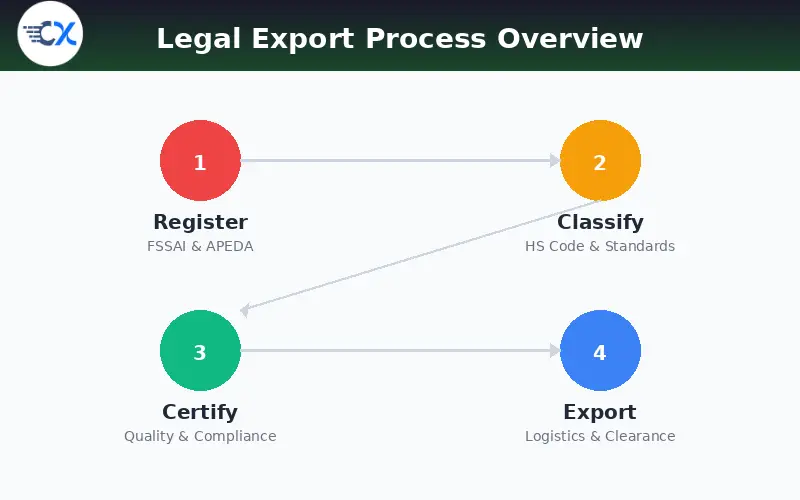
Three agencies play the most important role in Indian food exports. The FSSAI license for food export establishes food safety and rules for exporting only food products. APEDA manages agricultural and processed food exports, as well as registrations and guidance.
The Director General of Foreign Trade (DGFT) will be responsible for issuing Import-Export Code registrations. This is also linked to the issuance of RCMC. You should have a clear understanding of the scope of each agency so that you can prepare the paperwork for registration purposes quickly. Before taking orders, ensure you register with the relevant bodies.
Product Classification and Target Market Compliance
You must make sure that you are establishing the exact HS code and product category. There will be different standards for meat, dairy, and so on. You need to ensure the limitations of the importing nation and stay committed to that.
Some countries require specific health certificates or prior approval for commodities such as fruits, nuts, and seafood. Correct classification saves time and avoids last-minute rejections or unexpected testing requirements at the destination.
Key Statistics:
- India's agricultural and processed food exports reached $53.15 billion in FY 2023-24
- Over 200 countries import food products from India
- The food processing industry in India is expected to reach $535 billion by 2025-26
- APEDA registers over 25,000+ food exporters annually
- Top export destinations: USA, UAE, China, Bangladesh, and Saudi Arabia
Essential Licenses and Registrations for Food Export
As food exports include human consumption, a Central FSSAI licence is required. The Food Safety and Standards Authority of India (FSSAI) confirms that your products meet hygienic and safety requirements.
Additionally, this license enhances your brand's credibility to international buyers. Following business registration, you can apply online through the FSSAI portal. Before clearance, the FSSAI may inspect your facilities and test samples to ensure quality. If the license is proper and comes under food export compliance in India, it will give trust to the buyers.
APEDA Registration Process for Food Exporters
If you intend to export agricultural or processed foods, you must first register with APEDA (the Agricultural and Processed Food Products Export Development Authority). APEDA encourages Indian exporters and facilitates their access to international markets.
Registration will be conducted online and includes incentives such as financial aid, training, and participation in international trade fairs. It is also required to claim government incentives and export-related subsidies.
GST Registration and Import Export Code
Even if your business is largely export-oriented, you must register for Goods and Services Tax. GST registration online allows you to claim input tax credits and refunds on exported items that are zero-rated under GST rules.
Starting Your Food Export Business - Product Selection
You should select food items that complement India's production capabilities and the global demand. Before you start exporting, you should read the market. It is wise to analyze the psychology of the people of your target country.
You should examine the competition to determine pricing and possible profit margins. Spices, processed foods, and ready-to-eat meals are among India's most successful exports. Proper research will help you avoid future legal or logistical issues. Therefore, it is best to dedicate sufficient time to the research process to prevent unwanted problems.
International Certifications and Compliance Requirements
The import law will be different for the target countries. For example, exporting to the United States requires registration with the Food and Drug Administration. On the other hand, the European Union has strict labeling and cleanliness regulations.
Some countries require ISO 9001, HACCP, or organic certifications.
Ensure that you adhere to top-tier standards in production, storage, and packaging. Only these will help you export the food as you wish. Otherwise, there will be a rejection in shipment, or you will face financial loss.
Packaging, Labeling, and Quality Standards for Export
Food packaging is crucial in maintaining quality throughout transportation. When packing materials, use strong materials that adhere to international standards. You should include what the importers must see on the label.
Information should be in the language of the country you export to. Eco-friendly packaging and correct barcoding will also help your brand's reputation abroad. This step is so important for food export regulations India.
Export Logistics and Supply Chain Management
You should choose reliable logistics providers that have strong experience with exporting. They offer assistance with customs clearance and shipment documents. Also, they offer warehousing support as well.
When it comes to perishable products, Cold chain logistics is required to maintain the freshness. Reliable logistics partners help reduce delivery delays and ensure compliance with the legal standards of the target country.
Conclusion: Start Your Food Export Journey from India
One excellent strategy to grow your company internationally is to start exporting food products from India. Ensure you have a food registration certificate and any necessary permissions to export peacefully. You should cooperate with trustworthy partners, focus on quality, and comply with export regulations. The key to long-term success is this maxim.