Starting a business is thrilling, but compliance ensures its stability and longevity. Every startup must comply with Indian regulations to avoid penalties and operate successfully. Failure to comply can harm reputation or even result in shutdowns. Ensuring startup compliance in India from day one creates a solid foundation. Read on to learn how to ensure your startup is fully compliant with Indian laws.
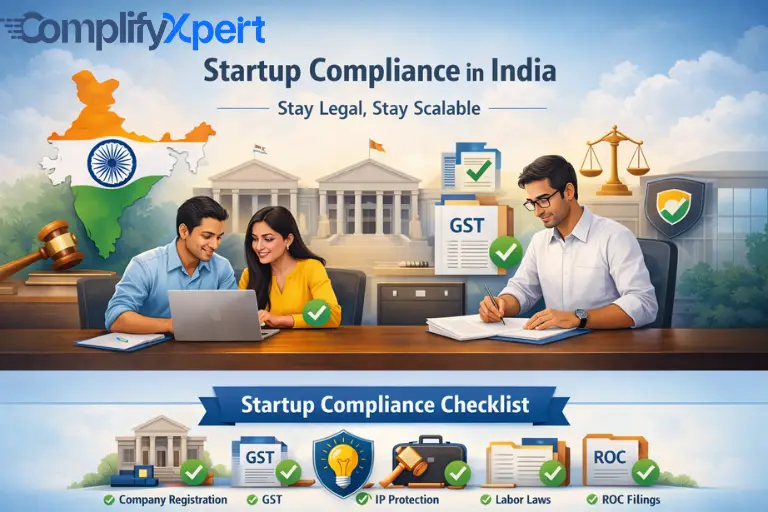
Table of Contents
Understanding Legal Compliance for Startups
Legal compliance involves adhering to all laws and regulations that govern your organization. To avoid penalties and maintain credibility, all startups must adhere to legal compliance. Compliance also promotes investor trust and streamlines business processes.
Startups must decide on the type of business entity they will establish. Each structure is subject to its own set of requirements. Knowing the requirements enables you to plan. Early compliance saves both time and money in the long run.
Following the rules from the start ensures that the company remains strong and resilient. Every founder should be aware of their company's commitments and take the necessary steps to fulfill them.
Impact of Startup Compliance in India
Maintaining startup compliance in India is critical for business expansion and credibility. Following the rules protects your startup from legal consequences. Compliance additionally encourages trust between investors and clients.
Businesses that remain compliant can benefit from government programs and incentives. Using a corporate compliance checklist keeps your operations structured and safe. It ensures the following are completed.
- Tax returns
- Employee obligations
- Registrations
Startups that do not comply may face penalties and legal action. Early compliance establishes a culture of discipline and accountability. Following all guidelines increases your business's basis for future success.
Register Your Business Entity
Registration grants your startup legal status. Companies and LLPs must be registered with the Registrar of Companies (RoC) of the Ministry of Corporate Affairs (MCA). This process results in a Certificate of Incorporation, which legally authorizes your business to operate.
Sole proprietorships and partnerships may be required to register with the Registrar of Businesses or under local state laws. Businesses with a physical office or store may also need to register as a Shop and Establishment. Proper registration is the first step in meeting startup compliance requirements, and it is required to
- Open a bank account
- Apply for permits
- Enter into government contracts.
Obtain Tax Registrations
Every Indian startup is required to register with the tax authorities. Before filing taxes, businesses must obtain a Permanent Account Number (PAN). If they deduct or collect taxes at the source, they must obtain a TAN.
Startups with a turnover that exceeds the threshold must register for GST. GST online registration makes the process easy and quick. Businesses can use tax registration to
- File returns
- Obtain input credits
- Operate legally.
Fines and legal challenges may result if registration is not completed on time. A crucial first step in ensuring that a company complies with Indian regulations is completing tax registration. Also, startups can make use of MSME Registration Services so that they can benefit from government schemes.
Protect Intellectual Property
Startups must protect their intellectual property (IP) to ensure their long-term success. Trademarks, copyrights, and patents protect others from using your ideas or brand. Registration is done at the Intellectual Property India office. As a startup, businesses can utilize Legal and Compliance Solutions to streamline the entire process smoothly without worry.
IP protection improves a startup's legal position and investor confidence. It also enhances market value and maintains a competitive advantage. To avoid problems, entrepreneurs should file for trademarks and patents as early as possible.
Intellectual property protection is a crucial component of the legal checklist for startups. Securing intellectual property rights promotes long-term business success and stops others from copying your brand or ideas.
Comply with Labor Laws
Startups must comply with labor laws to ensure the welfare of their employees. Businesses should adhere to the Employees' Provident Fund (EPF) and Employees' State Insurance (ESI) rules as applicable. The following must all be upheld
- Employment contracts
- Safety regulations
- Minimum salaries
- Working hours
Compliance with labor rules protects the startup from penalties and legal problems. It also boosts employee trust and morale. Even small businesses must follow these guidelines. Labor law compliance is a crucial component of the business compliance checklist, as it demonstrates an organization's commitment to ethical behavior and adherence to legal requirements. Following labor standards allows startups to function more efficiently and minimizes the possibility of fines or legal difficulties. To operate under state regulations, startups with physical offices should consider Shop and Establishment Registration.
Maintain Statutory Records
Every startup must keep proper legal records. This comprises
- Director and shareholder lists
- Resolutions
- Financial statements.
Proper record-keeping ensures transparency and is essential for audits and inspections.
It will protect the company in the event of any legal issues. To show accountability. It is the best idea for startups to update their data regularly.
For startups, one of the parts of legal compliance for startups is maintaining statutory records. If a startup fails to comply, it will result in either fines or delays in approvals. There is no doubt that the proper way of record maintenance will improve trust in your business among regulators and partners.
File Annual Returns and Financial Statements
Companies and LLPs should file yearly returns and financial statements with the Registrar of Companies (RoC). Some examples are balance sheets and profit and loss accounts. If you want to avoid a fine, make sure you are filing on time.
If the files are proper, this will show your professionalism to investors and the general public. To ensure the filing process is accurate, adequate accounting and bookkeeping are mandatory.
Filing annual returns and financial statements is mandatory compliances for startups. Entrepreneurs can seek expert support to reduce errors and ensure compliance. Timely filings contribute to smooth operations and long-term credibility.
Implement Data Protection Measures
Startups must secure their employees' and customers' personal data. During the process of collecting, storing, and processing data, consent and secure systems are required. Businesses must comply with applicable data privacy legislation and maintain transparency regarding the collection, use, and disclosure of data.
Noncompliance may result in fines, lawsuits, or reputational harm. Encryption, access controls, and secure cloud storage protect critical information. Data protection is a vital component of the corporate compliance checklist.
The Final Words
As a startup owner, ensure you are legally compliant. You should be completely compliant with Indian laws for startups. Being productive comes second; what comes first is being legit. This is what makes a startup a potential investment in the eyes of investors, and people will also place their trust in it.