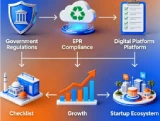
In India, the Extended Producer Responsibility (EPR) regulations for plastic packaging are crucial to follow. With evolving habits and needs, it is everyone’s responsibility to keep the environment free from plastic related concerns. This is why the government requires businesses to follow EPR regulations for plastic packaging and manage plastic waste sustainably. Read on to learn how to comply with ERP regulations for plastic packaging.
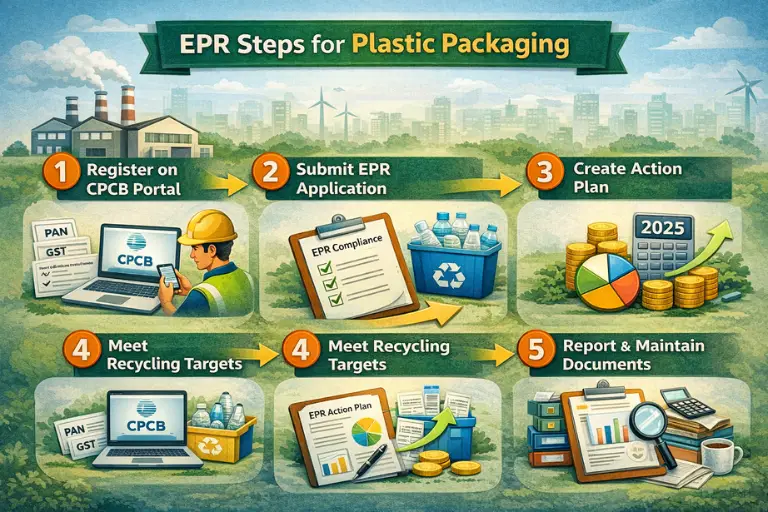
Table of Contents
What is EPR Authorisation for Plastic Waste and Why It Matter?
Extended Producer Responsibility simply makes the businesses take accountability for what they do. According to EPR regulations for plastic packaging, companies that manufacture or use plastic packaging are also required to handle its collection and recycling. The idea is simple enough to ensure that plastic packaging businesses stay eco-friendly.
If you put plastic on the market, you must also dispose of it properly after usage. This way, the accountability will be on businesses that profit from plastic use rather than on the government. This is why EPR compliance for plastic packaging will benefit both the company and the environment.
Legal Framework and Categories
In India, the guidelines are based on the 2016 Plastic Waste Management (PWM) guidelines, which were amended in 2022. The government established particular requirements for plastic packaging. These guidelines group packaging into categories. The following are the primary varieties. Each category has specific collection and recycling goals
- Rigid plastic
- Flexible packaging
- Multilayered plastic
- Compostable packaging Type
The new rules may include recycling requirements and strict packaging reuse targets. All businesses that deal with plastics must adhere to EPR compliance for plastic packaging so that everything will go smoothly.
Documentation and Eligibility for EPR Authorisation for Plastic Waste
Before you begin the registration procedure, you must obtain certain necessary documents. These include your company's
- PAN number
- GST certificate
- Proof of business registration.
You will also require information about the type and quantity of plastic packaging you use.
A waste management plan is essential. This strategy must specify how you will dispose of plastic once it becomes waste. An authorised signature letter is also required.
Recyclers must prove their agreements with processors. These documents serve as proof during inspections. Having them ready speeds up the registration procedure.
Step-by-Step EPR Registration on CPCB Portal
EPR authorisation for plastic waste in India requires producers, importers, and brand owners to register on the CPCB portal, submit accurate documentation, create a plastic waste management action plan, and meet annual recycling targets. This step-by-step guide explains the complete EPR compliance process for plastic packaging, including registration, reporting, inspections, and maintaining a valid EPR certificate under India’s Plastic Waste Management rules.
Step 1: Open An Account On The CPCB Portal
The first step is to sign up for EPR on the CPCB portal. The website serves as the primary tool for ensuring compliance with regulations governing plastic packaging.
You create an account with your company's email address and mobile number. You then submit your essential business credentials. You can log in once your application has been approved.
The platform offers multiple application forms for
- Producers
- Brand owners
- Importers
It also gives clear written instructions and checklists. This helps to avoid errors throughout the application process. You will receive an EPR certificate for plastic packaging once all approvals are complete.
Step 2: Fill out the Online EPR Application.
After creating an account, you must complete the application form. This form requests comprehensive company information as well as the type of plastic packaging you use. You must describe your waste management strategy. This involves determining how you will
- Collect
- Recycle
- Dispose of packaging waste
You also need to submit the names of your recycling partners. You should also submit how your initiative supports sustainable packaging compliance. The form asks you to upload all supporting files. These can be formats like
- JPG
- PNG
Verify that the documents are accurate and comprehensive. You can prevent delays and risks in this way.
Step 3: Create Your EPR Action Plan
Each business must provide an action plan. This strategy outlines how you will deal with plastic packaging waste.
Partnerships with recyclers and Producer Responsibility Organisations (PROs) are two common methods. Some businesses set up their own collection locations or take-back programs. The strategy should also include your annual recycling goals. Never forget to include plastic recycling compliance India in your plan.
Once you've created this strategy, you will have to upload signed agreements with partners. This shows your commitments are real rather than just words.
Step 4: Calculate And Meet Recycling Targets
In 2026, all registered businesses will be given annual targets. These are determined by the volume and type of plastic packaging released into the market.
When you register, your targets are calculated. You must meet them every year, without fail. There are three options for meeting targets. You can include recycled content in your packaging. You can recycle directly by collecting and processing. Alternatively, you can purchase recycling credits from approved processors.
It is important to monitor progress throughout the year. This prevents last-minute rushes and missing obligations. This step is also tied to the extended producer responsibility certificate, as the certificate remains valid only if annual targets are met.
Step 5: Submit Compliance Reports
The CPCB portal necessitates periodic reporting. You must certify your collection and recycling progress for each package category.
Returns must be submitted annually. These reports detail how much plastic you
- Produced
- Recycled
- Disposed
All interactions with recyclers and waste processors must be documented. Good recordkeeping is critical. It can assist you during audits and inspections. It also verifies that your objectives were met.
Step 6: Ensure Inspection And Maintain Documents
Random audits have become common under the 2026 regulations. State pollution control boards might request proof at any moment.
You must maintain detailed digital records of your packaging. This covers both the amount you introduced into the market and the amount you gathered and recycled.
Displaying your EPR certificate for plastic packaging on your property and in correspondence is a great practice. If you fail to provide evidence during an inspection, you may be subject to fines or suspension.
Penalties for Non-Compliance with EPR Regulations for Plastic Packaging
If you fail to comply with EPR regulations for plastic packaging, you will be required to pay a penalty. A first-time offence may result in a punishment of up to five lakh rupees. You may also be instructed to take corrective action.
If you break the regulations again, the fee may double. Your registration may be suspended for up to a year. You cannot continue to use plastic packaging without a certificate.
Severe or persistent failures can result in a permanent blacklist. This can jeopardise brand reputation and market access.
The Final Words
To conclude, a plastic packaging business should adhere to EPR regulations for plastic packaging so that the process goes smoothly and can avoid unwanted penalties. You can follow the above points to make the process for EPR Regulations for Plastic Packaging a successful one. Always adhere to regulations to save your business from potential risks and safeguard the planet Earth!